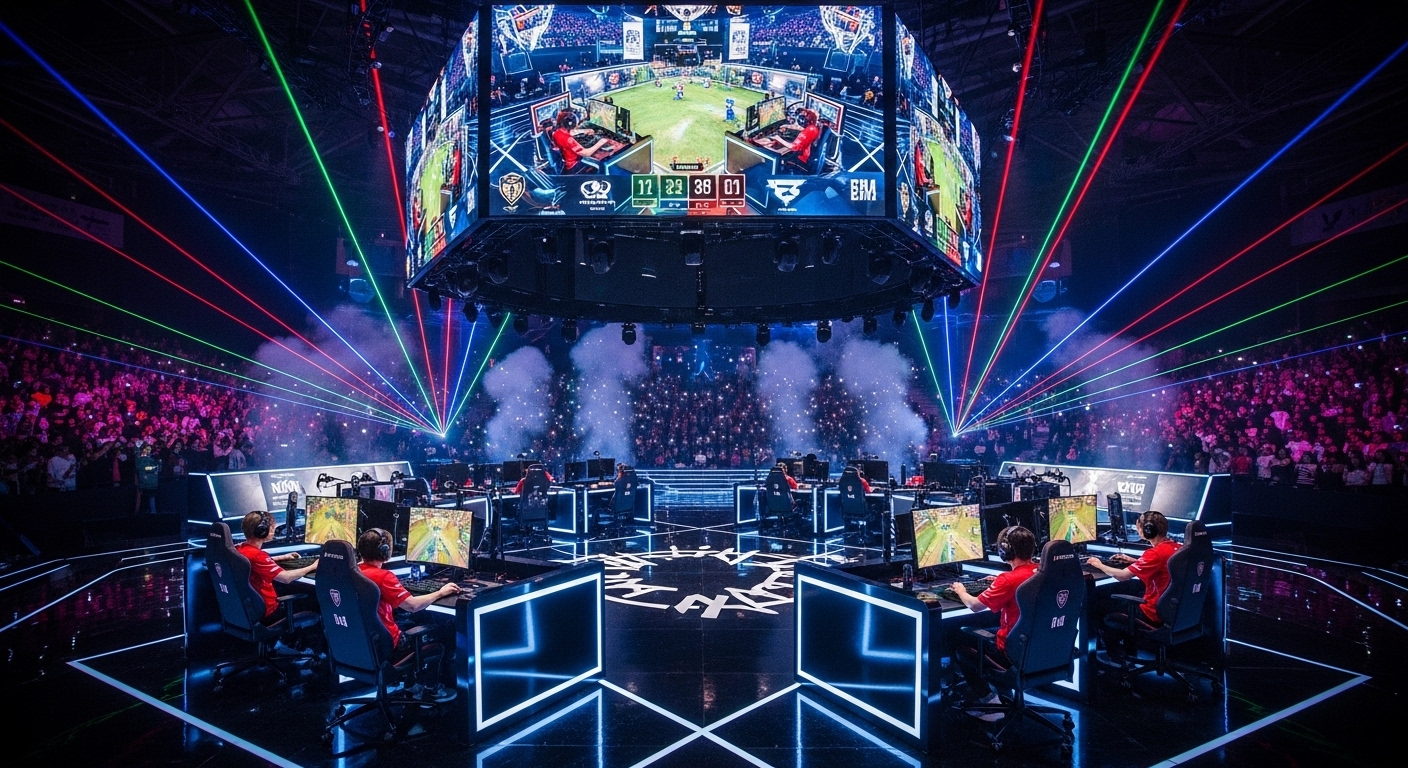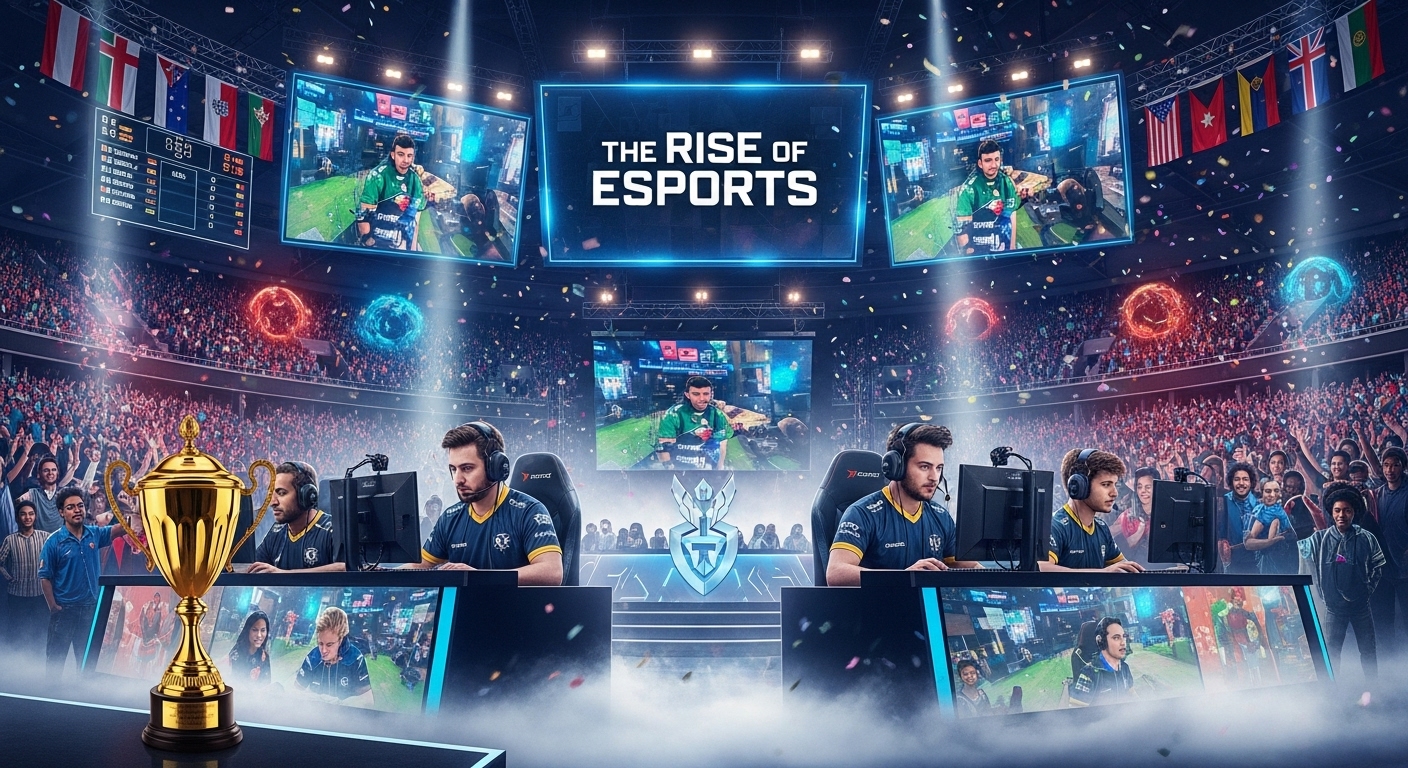
Esports, a term often used to describe organized, multiplayer video game competitions, particularly between professional players, has evolved into a global phenomenon over the past two decades. What began as a niche hobby for a select few has transformed into a booming industry worth billions of dollars. This blog post will explore the rise of esports, its impact on the gaming community and popular culture, the role of technology in its growth, and the future of competitive gaming.
The Birth of Esports: From LAN Parties to Global Tournaments
In the early days of video gaming, competitive play was a relatively small affair, often limited to local gatherings or friends competing against each other in arcades or at LAN parties (Local Area Network). The first significant steps toward organized esports came in the late 1990s and early 2000s. Titles such as “Quake” and “StarCraft” attracted dedicated players and spectators, and the first tournaments began to take shape.
The term “esports” itself began to gain traction in the early 2000s, with companies like Major League Gaming (MLG) helping to promote and organize events. These tournaments, which were typically held at gaming conventions or on college campuses, began to attract larger audiences. This era marked the beginning of esports’ transition from informal play to more structured, professional competitions.
The rise of online gaming played a pivotal role in this shift. The advent of faster internet speeds, along with the widespread adoption of broadband connections, made it possible for players to compete against others worldwide. Games like “Counter-Strike” and “Warcraft III” offered multiplayer modes that facilitated cross-border tournaments, further fueling the growth of esports.
Esports Goes Mainstream: The Role of Streaming and Sponsorships
As esports competitions grew, so did their audience. With the rise of platforms like Twitch, YouTube, and Facebook Gaming, it became easier than ever for fans to watch their favorite players and teams compete live. These streaming platforms revolutionized the way esports was consumed, turning it from a niche interest into a mainstream entertainment industry.
Twitch, in particular, played a significant role in bringing esports to the masses. Launched in 2011, the platform quickly became the go-to destination for gaming streams, offering live broadcasts of major esports tournaments, casual gaming streams, and everything in between. Viewership exploded, with millions tuning in to watch esports events like “League of Legends” World Championships or “The International” Dota 2 tournament. By 2018, Twitch had over 15 million daily active users, a clear sign that esports had firmly entered the cultural zeitgeist.
With the growth of esports, big brands and sponsors began to take notice. Companies in industries such as technology, energy drinks, and apparel began to sponsor esports teams, tournaments, and players. These sponsorships provided essential funding for the scene, enabling it to grow even further. In exchange for their investment, sponsors were able to reach a young, tech-savvy audience that was highly engaged with gaming and digital content.
Esports’ increasing visibility also led to media rights deals and collaborations with traditional sports networks. For example, the partnership between the esports organization ESL and Turner Sports, which saw the broadcasting of ESL’s CS:GO tournaments on TBS, marked a significant milestone in the integration of esports with mainstream sports media.
The Players: Professional Gamers as Celebrities
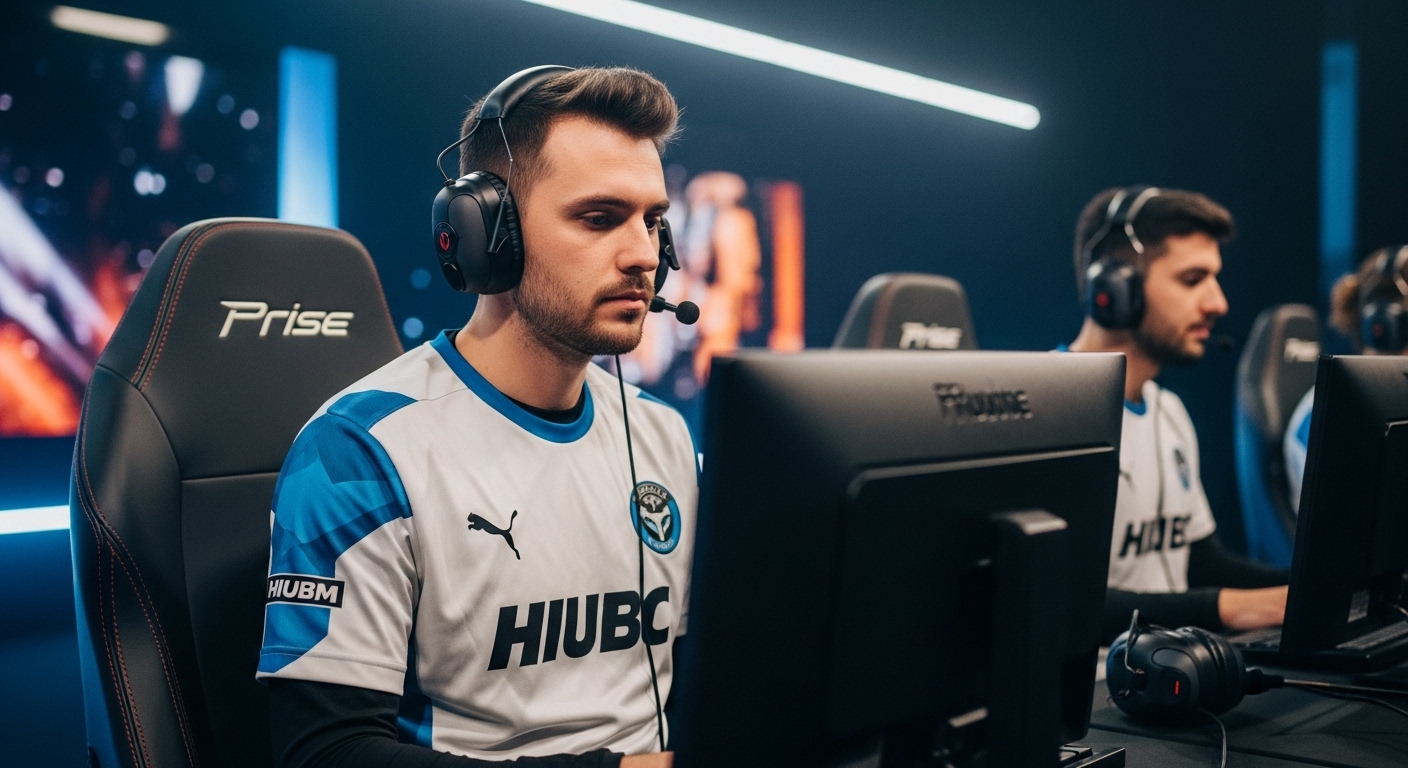
One of the most significant changes in the world of esports has been the rise of professional players. Just as in traditional sports, top esports players have become celebrities in their own right. These players, often starting from a young age, dedicate their lives to mastering a specific game, honing their skills, and competing in tournaments.
The journey to becoming a professional esports player is demanding and requires a combination of raw talent, practice, and mental fortitude. Unlike traditional sports, where physical prowess plays a dominant role, esports requires players to have exceptional hand-eye coordination, strategic thinking, and the ability to perform under pressure. Training often involves playing for hours each day, reviewing footage of previous matches, and studying opponents’ strategies.
Many top players have built massive online followings, with millions of fans tuning in to watch them play. Some have even turned streaming into a lucrative career, signing endorsement deals and attracting sponsorships. The fame of esports players is further amplified by social media platforms, where fans can interact directly with their favorite players, ask questions, and get insights into their training regimens and personal lives.
Players like Faker (Lee Sang-hyeok) from “League of Legends” and Dendi (Danil Ishutin) from “Dota 2” are household names within the gaming community, and their achievements in the esports world have made them global icons. These players are seen not only as competitors but also as influencers, with their opinions and actions having a significant impact on the gaming world.
The Growth of Esports Organizations and Teams
Along with the rise of individual players, esports organizations have also grown in prominence. These organizations, which manage and promote esports teams, have become key players in the industry. Teams like Fnatic, Cloud9, Team Liquid, and T1 have established themselves as powerhouses in games like “League of Legends,” “Counter-Strike: Global Offensive,” and “Fortnite.”
Esports organizations are responsible for recruiting talent, organizing training schedules, and securing sponsorships. In many ways, they function similarly to traditional sports franchises, with team owners, coaches, and managers overseeing the day-to-day operations of the organization. These teams often compete in a wide range of games, and success in one title can elevate the organization’s reputation and attract new players and sponsors.
The structure of esports organizations is also growing more professional. In the past, many teams were formed by grassroots communities or small groups of players who shared a common passion. Today, however, organizations employ full-time coaches, analysts, and support staff to help players improve their skills and prepare for tournaments. The emphasis on team dynamics and strategy has made esports more akin to traditional sports, where coaching and teamwork are just as important as individual skill.
Major Esports Titles and Tournaments
There are many games that have become central to the esports landscape, each with its own dedicated community and competitive scene. Some of the most prominent titles in esports include:
- “League of Legends”: Perhaps the most successful esports title, “League of Legends” (LoL) has become a cultural phenomenon since its release in 2009. The game is a multiplayer online battle arena (MOBA) where two teams of five players compete to destroy the enemy’s base. The “League of Legends World Championship” is one of the most-watched esports events globally, with millions of viewers tuning in every year to see which team will claim the coveted Summoner’s Cup.
- “Dota 2”: Developed by Valve, “Dota 2” is another hugely popular MOBA that has garnered a dedicated esports following. Its annual tournament, “The International,” is one of the largest esports events in the world, with prize pools often exceeding $30 million. The game’s complex mechanics and deep strategic elements make it a favorite among competitive gamers.
- “Counter-Strike: Global Offensive” (CS:GO): As one of the longest-running competitive shooters, “CS:GO” has a rich history in esports. Its fast-paced, tactical gameplay and emphasis on team coordination make it a thrilling spectator sport. The “CS:GO Major Championships” are some of the most prestigious tournaments in esports, attracting top-tier teams and players.
- “Fortnite”: Although it is relatively new to the esports scene, “Fortnite” has had a significant impact on the industry. The game’s battle royale mode has attracted millions of players, and its tournaments, such as the “Fortnite World Cup,” have drawn massive viewership. The game’s emphasis on building and creative gameplay has made it a unique addition to the competitive gaming landscape.
- “Overwatch”: Blizzard’s team-based shooter “Overwatch” has become a major player in the esports world, thanks in part to the launch of the “Overwatch League” (OWL) in 2018. The OWL is a city-based league that mirrors traditional sports leagues like the NBA or NFL. With teams representing cities from around the world, the OWL has helped to legitimize esports as a mainstream form of entertainment.
The Role of Technology in Esports Growth
One of the driving forces behind the growth of esports has been technological advancement. From faster internet connections to more powerful gaming hardware, technology has played a crucial role in enabling competitive gaming to flourish. High-speed internet, in particular, has allowed players to compete seamlessly across borders, creating a truly global competitive scene.
The rise of cloud gaming and next-gen consoles has also opened new doors for esports. Cloud platforms like Google Stadia and Microsoft’s xCloud are paving the way for gaming to be more accessible, eliminating the need for expensive hardware. Players can now compete in esports tournaments using a variety of devices, from high-end gaming PCs to mobile phones, broadening the scope of competitive gaming.
In addition to hardware improvements, the quality of live streaming has greatly enhanced the esports viewing experience. Platforms like Twitch offer ultra-low latency streams, allowing fans to watch events in real-time. High-definition video, combined with features like in-game replays and multi-camera angles, ensures that esports events are just as exciting to watch as traditional sports.
The Future of Esports: Expanding Horizons
As esports continues to evolve, it’s clear that the industry is poised for even greater growth. The future of esports holds several exciting possibilities, from the expansion of mobile esports to the integration of virtual reality (VR) and augmented reality (AR) into competitive gaming. Additionally, the continued development of esports infrastructure, including better broadcasting, more professional organizations, and larger tournaments, will help the industry reach new heights.
Esports is also beginning to attract the attention of educational institutions. Many colleges and universities have started offering scholarships for esports players, and some schools are even creating their own competitive teams. This trend signals that esports is being taken seriously as a legitimate career path, and that competitive gaming will continue to integrate into the fabric of global culture.
As esports becomes more mainstream, it will likely continue to blur the lines between gaming and traditional sports. The rise of sports betting, digital collectibles (NFTs), and esports in virtual worlds further demonstrates that the boundaries of what constitutes a competitive event are rapidly expanding.
Conclusion: Esports as a Cultural and Economic Force
Esports has transformed from a small, niche community into a cultural and economic powerhouse. With millions of fans worldwide, professional players making six-figure salaries, and companies investing billions of dollars into the industry, it’s clear that esports is here to stay. The rise of online streaming platforms, the growth of major esports organizations, and the increasing integration of esports into popular culture all point to a bright future for competitive gaming.
As technology continues to advance and the esports ecosystem continues to grow, we can expect to see new innovations and opportunities arise, cementing esports as one of the most influential and exciting industries of the 21st century.