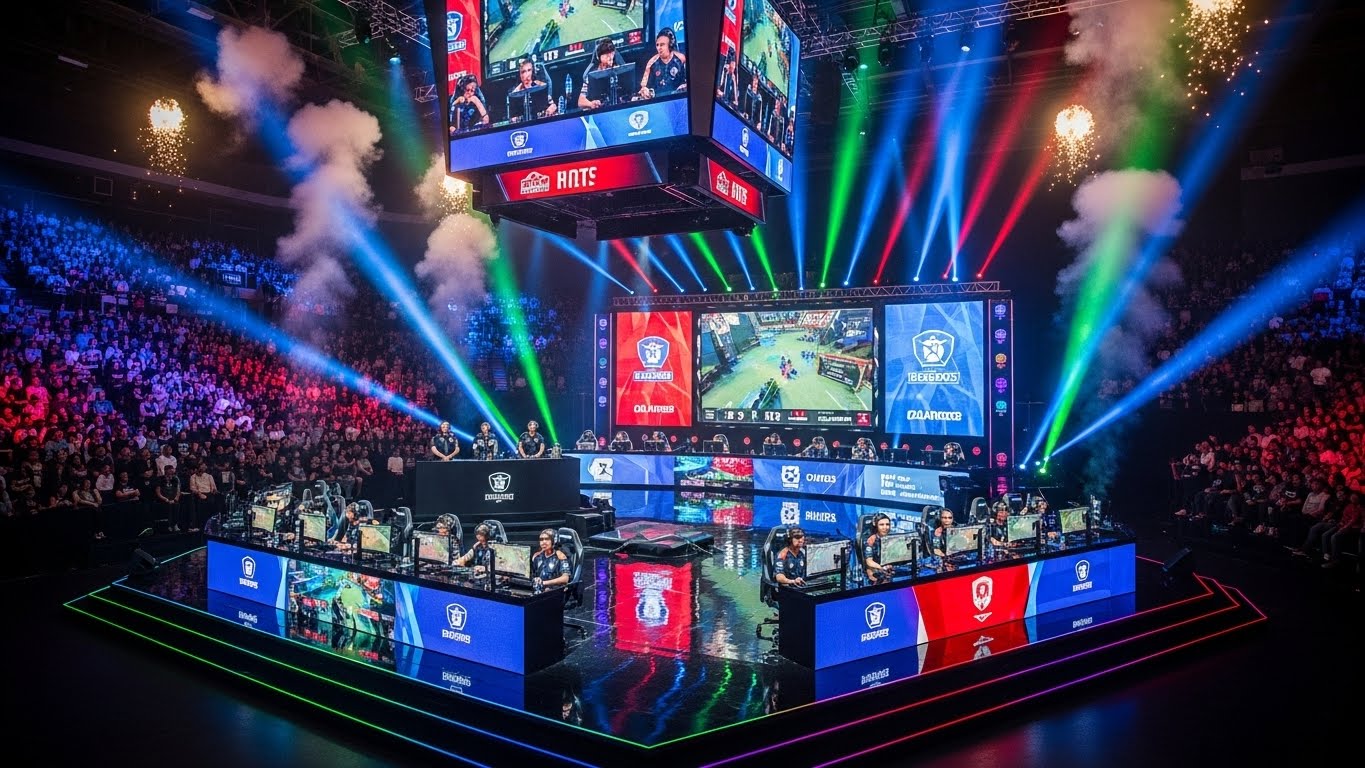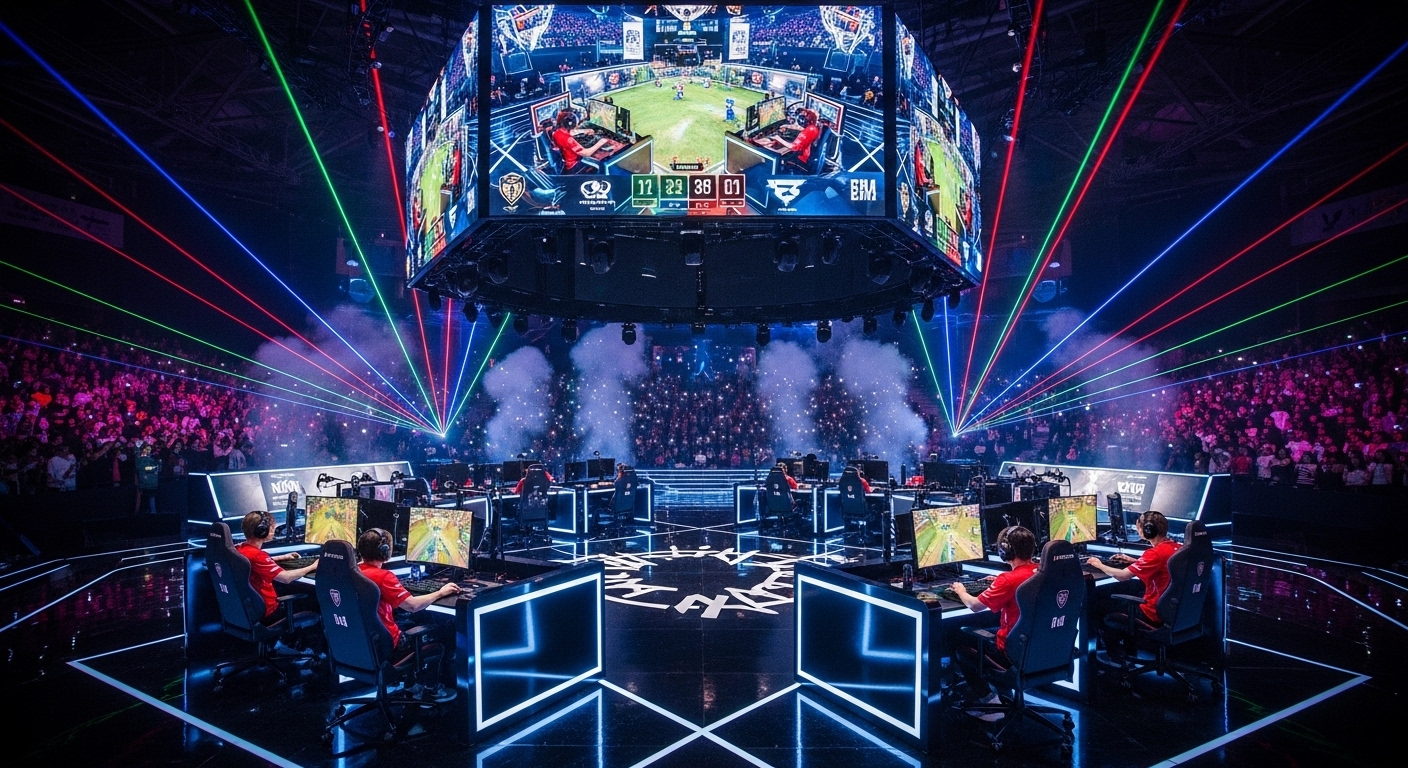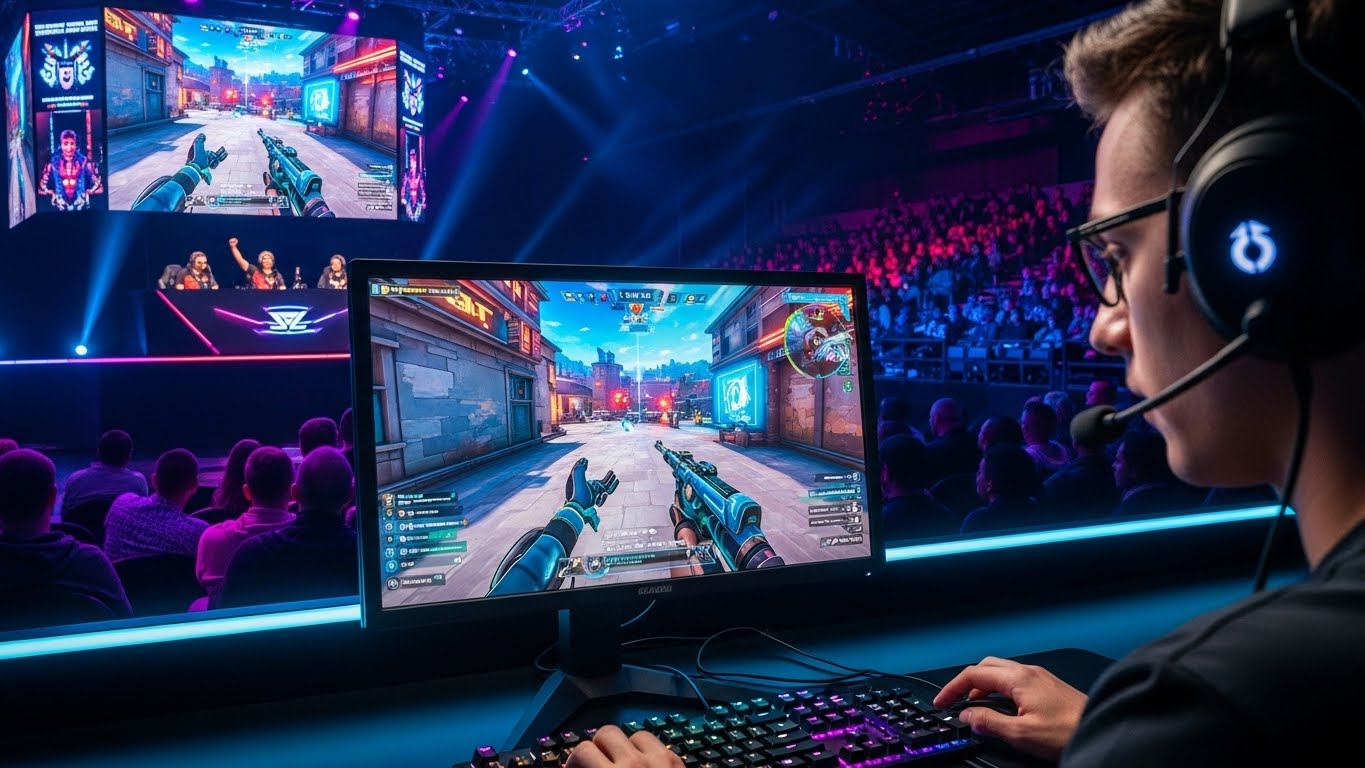
Esports, once a niche interest for a small community of hardcore gamers, has evolved into a global powerhouse that attracts millions of viewers and generates billions in revenue. What was once seen as a subculture of gaming has now become a mainstream entertainment industry that spans continents, with professional tournaments, dedicated teams, and sponsors. In this blog post, we will explore the journey of esports from its humble beginnings to its present-day prominence and what the future holds for this exciting industry.
The Birth of Competitive Gaming
Esports traces its origins back to the early 1970s, when gaming competitions began taking place in small, localized settings. One of the earliest examples of competitive gaming was the 1972 Stanford University’s Spacewar tournament. Players gathered to compete in the space-themed game “Spacewar,” which is widely regarded as one of the first video games in history. However, these events were still small and largely informal. It wasn’t until the mid-1990s, with the rise of personal computers and the internet, that competitive gaming began to gain a foothold.
The Rise of LAN Parties
In the late 1990s and early 2000s, gaming tournaments were mostly held in local settings such as LAN (Local Area Network) parties, where players would bring their computers together to compete in person. Titles like Quake, StarCraft, and Warcraft III were popular in these early competitions, and players would compete against one another for pride and sometimes small cash prizes. These LAN events were often grassroots gatherings, with participants forming tight-knit communities that were passionate about their favorite games.
The Emergence of Online Competitions
The biggest breakthrough for esports came with the advent of high-speed internet. With broadband becoming more widely available in the early 2000s, players no longer had to rely on LAN parties to compete against one another. Online gaming quickly became mainstream, allowing players from around the world to face off in virtual arenas.
One of the first major online tournaments was the World Cyber Games (WCG), launched in 2000. The WCG brought together players from different countries to compete for global glory, and its success helped demonstrate the potential of esports as a viable industry. As more games introduced competitive multiplayer modes, it was clear that esports was not a passing trend, but rather something that could grow exponentially.
The Explosion of Esports
The early 2010s saw esports transition from a niche hobby to a massive global industry. Major game publishers, such as Riot Games with League of Legends and Blizzard with Overwatch and Hearthstone, began organizing official competitive leagues with significant prize pools, professional teams, and broadcasting on platforms like Twitch and YouTube.
The Role of Streaming Platforms
Twitch, a live streaming platform dedicated to gaming, played a crucial role in the growth of esports. Launched in 2011, Twitch allowed players to stream their gameplay and build large followings. Esports tournaments began broadcasting live on Twitch, drawing in thousands of viewers who could watch their favorite players and teams compete in real-time. This exposure turned esports into a spectator sport, where fans not only participated as competitors but also as enthusiastic viewers.
Twitch’s success has had a ripple effect, with other platforms such as YouTube Gaming and Facebook Gaming entering the scene. These platforms created new opportunities for both aspiring players and established professionals to reach a global audience, thus driving the popularity of esports even further.
The Rise of Professional Esports Leagues
Along with the explosion in viewership came the professionalization of esports. Professional teams and organizations began to emerge, with players signing contracts, earning salaries, and competing in organized leagues. One of the most notable examples of this trend is League of Legends, which launched its League of Legends Championship Series (LCS) in 2013. The LCS was one of the first fully-fledged esports leagues, with teams representing different regions around the world and participating in regular seasons with playoffs and finals.
Other games, such as Dota 2, CS:GO (Counter-Strike: Global Offensive), and Overwatch, followed suit with their own professional leagues. These leagues featured sponsorship deals, team organizations, and tournament formats that mirrored traditional sports leagues like the NBA or NFL. As a result, esports players began to gain recognition as legitimate athletes, with their skills and dedication being celebrated in the same way as those in traditional sports.
Major Tournaments and Prizes
One of the key factors that fueled the rapid growth of esports was the rise of major tournaments with huge prize pools. In 2011, The International, the world championship tournament for Dota 2, introduced a prize pool that would forever change the landscape of esports. What began as a $1 million prize pool grew to over $40 million by 2018, making it the largest prize pool in esports history.
Other games, such as Fortnite, PUBG, and Call of Duty, followed suit with tournaments that offered similarly substantial rewards. The financial backing of these tournaments attracted not only players but also huge corporate sponsors, such as Coca-Cola, Intel, and Mercedes-Benz, who saw the potential in tapping into the rapidly growing esports audience.
Esports as a Global Industry
Today, esports is a multi-billion dollar industry, encompassing various segments, from streaming and sponsorships to merchandising and live events. According to Newzoo’s Global Esports Market Report, the global esports audience is projected to surpass 600 million by 2024, and the industry will generate over $1.5 billion in revenue.
The Role of Sponsors and Advertisers
One of the driving forces behind the commercial growth of esports has been sponsorships and advertising. Traditional brands, recognizing the immense potential of reaching a young, engaged audience, have begun to pour money into esports. This includes not just sponsors for individual players and teams, but also league and event sponsors, who seek to connect with an audience that is increasingly difficult to reach through traditional media channels.
Brands like Nike, Red Bull, and Intel have been involved in esports for years, sponsoring tournaments and teams, while also creating products specifically tailored for gamers. These partnerships have helped elevate esports into the realm of serious professional sports.
The Growth of Esports in Mainstream Media
Esports has also made significant inroads into mainstream media. Major television networks like ESPN and TBS have begun broadcasting esports tournaments, while sports networks and cable channels have aired esports events on a regular basis. Some tournaments are even being hosted in traditional sports arenas, such as The League of Legends World Championship being held in the iconic Bird’s Nest Stadium in Beijing.
Esports is now seen as a legitimate form of entertainment, with its cultural significance growing year after year. The potential for esports to become a globally recognized form of competitive entertainment is enormous, and it’s clear that the future holds much promise for its continued evolution.
The Future of Esports: What Lies Ahead?
As esports continues to grow in popularity, there are several key trends that are likely to shape its future.
The Integration of VR and AR
Virtual Reality (VR) and Augmented Reality (AR) technologies hold immense potential for transforming the esports experience. With companies like Oculus and Valve investing in VR gaming, it’s only a matter of time before esports tournaments incorporate these immersive technologies. VR could enable players to engage in fully immersive competitions, while AR could provide viewers with unique ways to experience tournaments from new perspectives.
The Expansion into Traditional Sports
Esports is increasingly being viewed as a legitimate form of sports, and as such, it may one day be integrated into the traditional sports ecosystem. This could include esports being included in global sporting events such as the Olympic Games, which has already expressed interest in including esports as a demonstration sport. The convergence of esports and traditional sports is becoming more likely as the lines between the two continue to blur.
More Investment in Grassroots Esports
While the spotlight is often on large-scale tournaments and professional leagues, there is an increasing focus on nurturing grassroots esports. Many game developers and organizations are now investing in programs that foster young talent and build communities around competitive gaming. This investment in grassroots esports will create a more sustainable future for the industry, as well as provide a platform for the next generation of players to rise to the top.
Conclusion
Esports has come a long way from its humble beginnings as small LAN parties and community-driven competitions. Today, it is a billion-dollar industry with a dedicated global following, professional leagues, and world-class players. From streaming platforms like Twitch to major corporate sponsors and live events in massive arenas, esports has proven that it is here to stay.
As the industry continues to evolve, one thing is clear: esports is no longer just about playing games. It’s about building communities, creating new entertainment experiences, and inspiring future generations of gamers and athletes alike. Whether you’re a player, a fan, or a casual observer, it’s undeniable that esports has become a powerful force in the world of entertainment, and its future holds endless possibilities.